
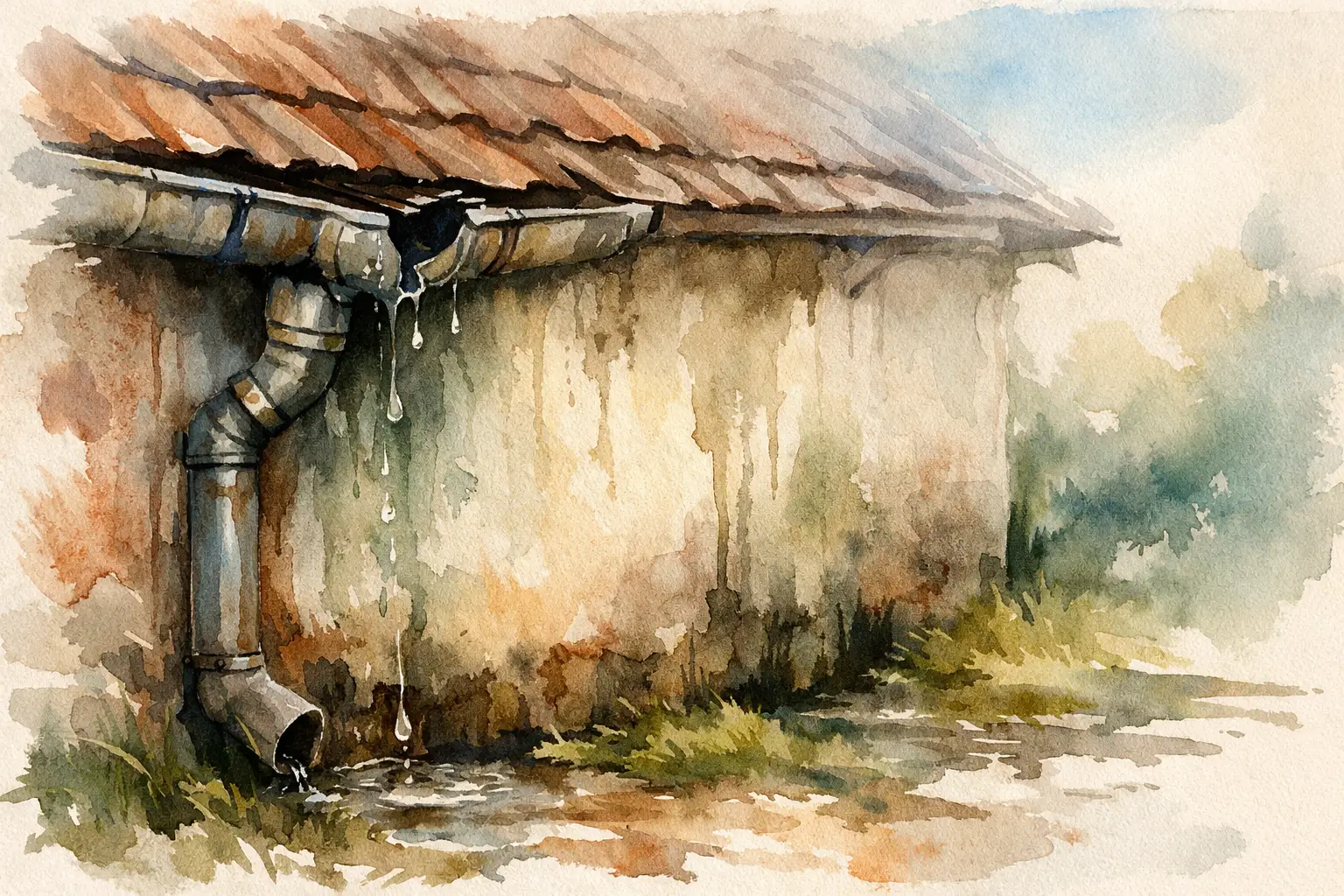
You do not need a major roof leak to end up with damp walls. In many cases, the problem starts much lower down, at gutter level. If you are asking can damaged gutters cause damp, the short answer is yes. Leaking, sagging, blocked or broken guttering can send rainwater where it should never go, soaking external walls, saturating masonry and eventually showing up as damp patches indoors.
This is one of those issues that often looks minor from the ground. A small drip from a joint or an overflow during heavy rain can seem harmless at first. Given enough time, though, repeated water exposure can cause staining, mould growth, blown plaster, rotten fascias and even damage around the roofline. The longer it is left, the more expensive it usually becomes to put right.
How damaged gutters lead to damp
Gutters are there to collect rainwater from the roof and move it safely into the downpipes and drainage system. When they are working properly, they protect walls, foundations, soffits and roof edges from constant water exposure. When they are not, water starts spilling over the sides, leaking through joints or running down the face of the building.
That is where damp problems begin. Brickwork, render and mortar are all vulnerable when they are repeatedly soaked. Some materials absorb moisture faster than others, but none are designed to cope with constant saturation. Over time, that moisture can work its way through the wall and appear indoors as peeling paint, bubbling plaster, damp patches or a musty smell.
The risk is often higher during periods of prolonged rain, which is why gutter faults can become a bigger issue in places like Cumbria and the Borders. A gutter that only overflows slightly during a shower may pour water down the wall during a full day of bad weather.
Can damaged gutters cause damp in every part of a property?
Not always in the same way, but they can affect more areas than many property owners realise. The most obvious issue is penetrating damp on external walls, especially near corners, chimney breasts and upper-floor rooms. Water can also affect the roofline, causing timber fascias and soffits to soften and rot.
If the overflow is heavy enough, water may collect around the base of the building too. That can increase the risk of damp at ground-floor level, particularly if the drainage is poor or the wall already has cracks, failed pointing or damaged render. So while the gutter may be the starting point, the visible signs of damp do not always appear directly beside it.
That is why proper inspection matters. Damp is not a single-condition problem with a single cause. Condensation, roof leaks, cracked masonry and plumbing faults can all create similar symptoms. But damaged gutters are one of the most common and most overlooked causes.
The gutter faults most likely to cause damp
Some gutter problems are obvious, while others are easy to miss until the rain starts. Blockages are a frequent culprit. Leaves, moss and roof debris build up inside the channel, stopping water from flowing freely to the downpipe. Once that happens, even a well-installed gutter can overflow.
Leaking joints are another common issue. Seals wear out, brackets loosen and sections shift out of line. Instead of carrying water along the run, the system starts dripping at connection points. Cracks in plastic guttering can do the same, especially on older installations exposed to years of cold weather and sun.
Sagging gutter lines can also lead to trouble. If the fall is wrong, water sits in the gutter rather than draining away. That standing water adds weight, puts more stress on the brackets and eventually increases the chance of leaks and overflow. In winter, trapped water can freeze and make the problem worse.
Downpipes deserve attention too. If they are blocked or disconnected, water has nowhere to go. It backs up into the gutter and spills over the edge, often soaking the same section of wall every time it rains.
Signs that guttering is behind your damp problem
A damp patch indoors does not always point straight to the source, but there are some useful clues. Externally, look for streaking on the wall, green staining, algae growth, peeling paint near the roofline or obvious overflow marks beneath the gutter. You may also notice loose brackets, plant growth in the gutter or water pouring over the side during rainfall.
Inside, the signs can include damp patches near the top of walls, staining around window reveals, flaking paint, mould on colder external walls or plaster that feels soft and crumbly. If the issue becomes worse after rain rather than during cold still weather, that is another sign the cause may be external rather than condensation.
It is also worth checking whether the damp is isolated to one area. If the problem lines up with a leaking joint, a blocked hopper or a faulty downpipe outside, the connection becomes much more likely.
Why the problem should not be ignored
Gutter faults rarely fix themselves. A minor leak can continue for months without attracting much attention, all while moisture is working into the structure. By the time the indoor damage becomes obvious, the repair may involve more than just clearing a blockage or resealing a joint.
Persistent damp can contribute to mould growth, internal damage and decay in timber elements around the eaves. It can spoil decoration, affect insulation performance and leave parts of the property feeling colder and harder to heat. For landlords and commercial property owners, it can also become a tenant complaint or maintenance liability that grows quickly if delayed.
There is also the issue of masonry deterioration. Repeated wetting and drying weakens mortar joints over time, and in colder weather trapped moisture can expand as it freezes. That makes external repairs more likely later on.
Repair or replacement – what is the right answer?
It depends on the condition of the system. If the guttering is generally sound and the problem is limited to a small blockage, a leaking union or a loose bracket, a straightforward repair may be all that is needed. In many cases, early intervention keeps costs down and prevents wider damage.
If the gutter is brittle, heavily warped, poorly aligned or failing in several places, replacement is often the better long-term option. Patching one section of a worn-out system can become false economy if another joint fails a few months later. The same applies where the original installation was incorrect and the falls do not allow water to drain properly.
A proper inspection should also consider the surrounding roofline. Fascias, soffits, verge edges and pointing can all be affected by prolonged water exposure. Fixing the gutter without checking for related damage can leave part of the problem behind.
Preventing damp caused by guttering
The most practical approach is regular inspection and maintenance, especially after heavy rain, autumn leaf fall and winter storms. You do not need to wait until water is visibly pouring over the edge. Catching loose joints, early cracks and partial blockages before they worsen is usually far cheaper than dealing with internal damp repairs later.
Properties near trees often need more frequent gutter clearing. Older buildings may also need closer attention because worn pointing, porous brickwork or ageing roofline materials make them less forgiving when water starts escaping. In exposed areas, strong winds can loosen brackets and shift sections out of position, so storm checks are sensible too.
For homeowners and landlords, the key is not to treat guttering as an afterthought. It is one of the simplest parts of the exterior to overlook, yet it plays a major role in protecting the building fabric.
When to call in a professional
If you can see obvious overflow, staining, sagging runs or signs of damp inside, it is worth having the system checked properly. The cause may be simple, but guessing can waste time and money. Damp symptoms often overlap, and it takes experience to tell whether the issue starts with the guttering, the roof covering, the wall itself or a combination of faults.
A professional inspection should look at the full water path, from roof edge to drainage outlet, rather than just the most visible symptom. That is especially important on properties with chimneys, extensions, valleys or mixed roof levels, where rainwater management is more complicated.
For property owners across Carlisle, Cumbria and the surrounding areas, getting the issue assessed early can prevent a small exterior repair turning into a much larger internal problem. Ideal Roofers deals with gutter repairs, roofline issues and related water ingress problems, so if you have noticed damp and suspect the guttering may be to blame, acting sooner is usually the safest option.
A damp patch on the wall is easy to dismiss for a while. The trouble is, rainwater rarely stays where it starts. If your gutters are leaking, blocked or pulling away from the property, putting them right promptly is one of the simplest ways to protect your home from bigger repair bills later.